
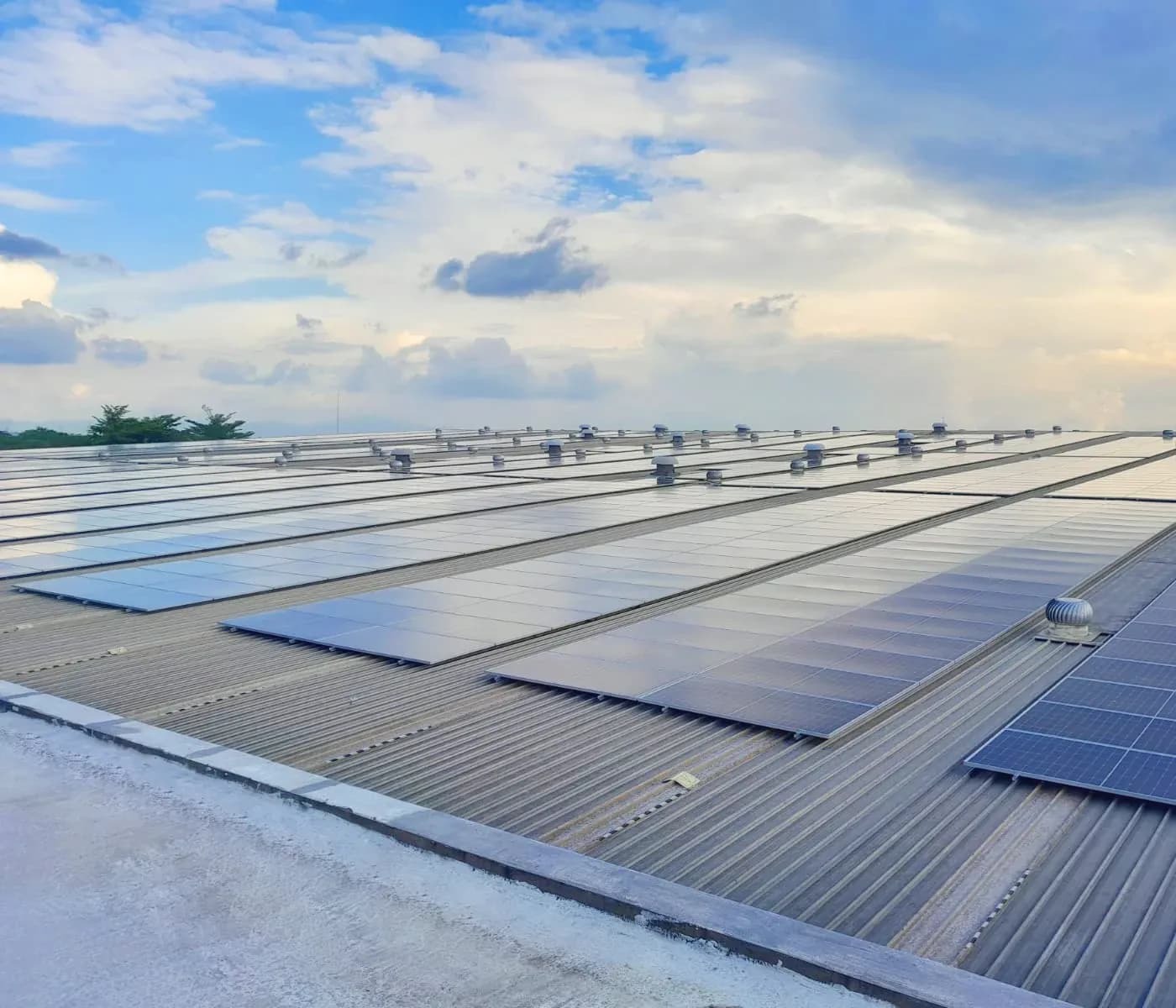
A solar panel mounting bracket is the part that fixes a solar array to the roof. It sits between the roof structure and the rail that carries the panels, so it decides two things: how the load gets into the building, and whether the roof stays watertight.
There is no single bracket for every roof. A tile roof takes a hook, a metal sheet roof takes an L-foot, a fibre cement roof takes a hanger bolt, a standing seam roof takes a clamp, and a flat roof often needs no fixing at all. This guide goes through the main roof types one by one.
What a solar panel bracket does
Every roof-mounted array passes its load down the same path: panel, clamp, rail, bracket, roof structure. The bracket is the last step, and it has three jobs:
- Carry the load. Wind and snow load must reach the rafters, purlins or deck — not rest on the roof covering.
- Keep water out. Any hole through the roof needs a seal or a flashing. Some brackets avoid the hole altogether.
- Set the height. The bracket lifts the rail clear of the roof surface so the panels sit level.
You will also see these parts called solar panel fixings, roof fixings or solar brackets. They mean the same thing.
Solar panel brackets by roof type
| Roof | Bracket | How it fixes | Hole in the roof covering? | Megawa system |
|---|---|---|---|---|
| Clay or concrete tile | Roof hook | Bolted to the battens or rafters under the tile | No tile drilling in a standard install | Solaris HOOK |
| Slate | Slate hook | Fixed to the roof structure beneath the slates | No slate drilling | Solaris HOOK |
| Trapezoidal, IBR or corrugated metal sheet | L-foot or trapezoidal clamp kit | Screwed through the crest of the sheet into the purlin | Yes, sealed with EPDM | Solaris WAVE |
| Fibre cement sheet | Hanger bolt | Lower thread fixed into the roof structure | Yes | Hanger bolts, on request |
| Standing seam metal | Seam clamp | Clamped onto the raised seam | No | Apollo SEAM |
| Asphalt shingle | Flashed L-foot | Fastened into the roof decking, under a flashing plate | Yes, flashed and sealed | Solaris SHINGLE |
| Flat roof | Ballasted frame or tripod | Held down by concrete ballast | No (ballasted) | Matrix ECO, Matrix ELITE, Nova TRIPOD |
Ground-mounted arrays do not use roof brackets. They stand on posts or ground screws; see our ground mounting systems.
Tile and slate roofs: roof hooks
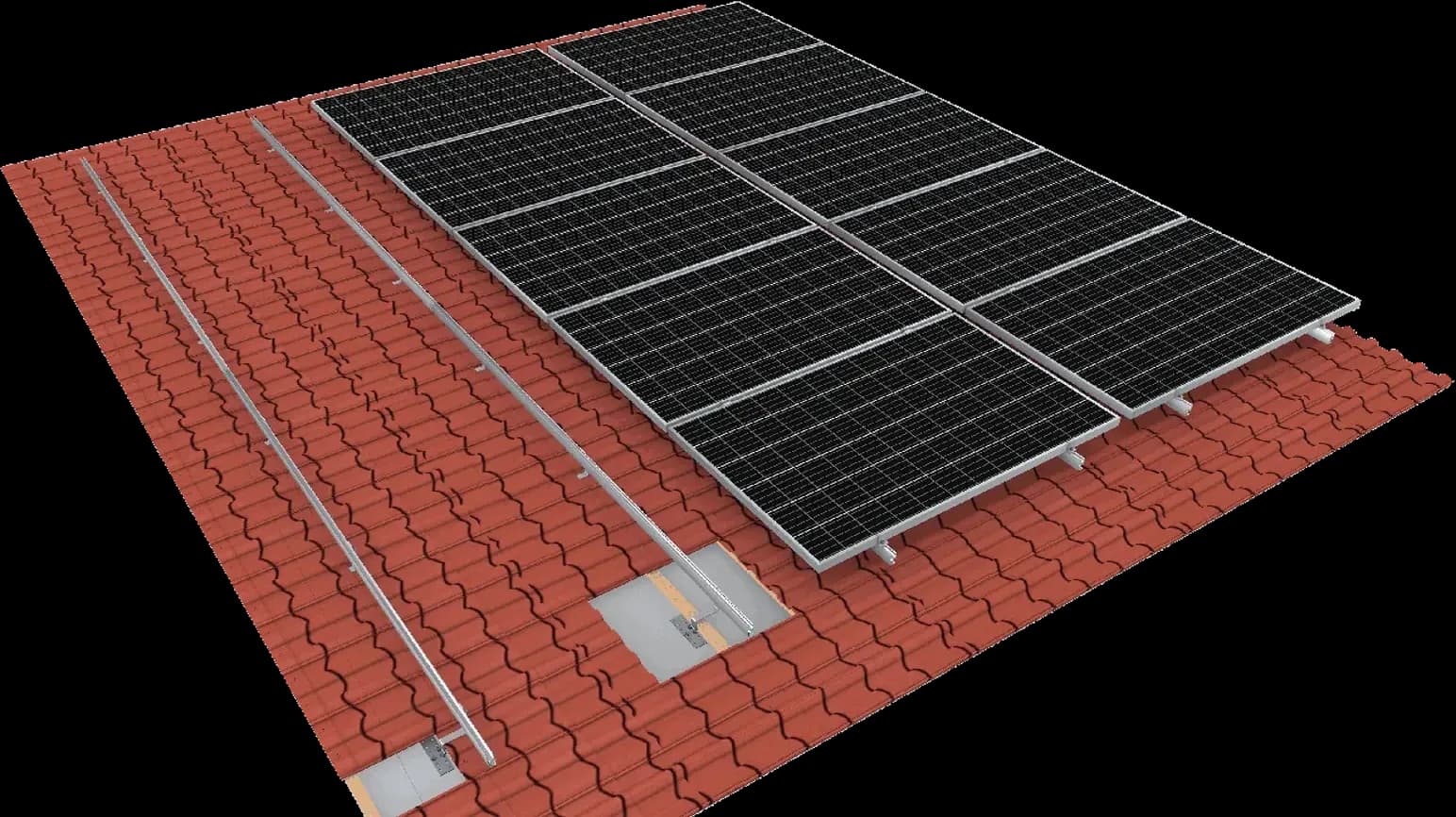
On a tile roof the bracket is a roof hook. The tiles above each fixing point are lifted, the hook is bolted to the battens or rafters, and the tiles go back over it. The hook carries the load into the roof structure, so the tiles themselves carry none of it. No tile drilling or cutting is part of the standard installation.

Tile profiles differ, so hooks come in different shapes. The Solaris HOOK has hooks for Roman, S-curve, flat, interlocking, concrete and clay tiles, with adjustable height to clear the tile. Slate roofs take a dedicated slate hook, which fixes to the roof structure beneath the slates without drilling them. The rails and clamps on top stay the same across every hook, on roof slopes up to 45 degrees.

Metal sheet roofs: L-feet and clamp kits
On trapezoidal and corrugated metal sheets the usual bracket is an L-foot: an L-shaped aluminium foot that is screwed through the crest of the sheet into the purlin beneath. The crest is the high point of the profile, so rainwater runs along the valleys, away from the fixing. Each fixing is sealed with EPDM.

The Solaris WAVE uses L-feet or trapezoidal clamp kits matched to the sheet profile, including the IBR sheeting common in South Africa. Fixings are typically 1,000–1,200 mm apart; the wind calculation for each site sets the exact spacing. For a sheet profile that no standard kit fits, a custom clamp kit is made to the profile drawing.

The standard system sits flush with the roof. Where a low-pitch roof needs more tilt, leg kits raise the array by 10–15°, 15–30° or 30–60° on the same rails.
Fibre cement sheet roofs: hanger bolts
A hanger bolt is a double-threaded bolt. The lower thread fixes into the roof structure, and the upper thread carries the bracket for the rail. Megawa supplies hanger bolts, and they can be used on fibre cement sheet roofs. Tell us the sheet type when you ask for a quote.
Standing seam roofs: seam clamps
A standing seam roof needs no holes. The bracket is a clamp that grips the raised seam and is tightened to a set torque. The rail mounts on the clamp, the roof sheet is never drilled, and the clamp can be removed later without leaving a hole.

The Apollo SEAM has standard clamps for snap-lock, mechanical-lock and rounded seams. It also fits clip-lock sheeting: send the sheet profile and the clamp is matched to it.
Asphalt shingle roofs: flashed L-feet
On asphalt shingles the bracket is an L-foot with a flashing. The foot is fastened into the roof decking. An aluminium flashing plate slides up under the shingle course above, so water runs over the metal and on down the roof, and an EPDM gasket seals the fastener underneath. The Solaris SHINGLE works on 3-tab and architectural shingles.

Flat roofs: ballast instead of brackets
Most flat roofs are not drilled at all. The array stands on a frame, and concrete ballast holds it down, so the roof membrane stays sealed. How much ballast is needed depends on wind exposure and roof height, and it is calculated for each project.

- Matrix ECO: ballast blocks in aluminium trays, tilt adjustable from 5° to 30°.
- Matrix ELITE: a low, wind-shedding frame at 5°, 10° or 15° that needs less ballast, in east-west or south-facing layouts.
- Nova TRIPOD: a folding tripod with any tilt from 0° to 45°. It can be ballasted, set on a fixed foundation, or bolted into a concrete deck.
What sits on the bracket: rails and clamps
The bracket is one part of a mounting kit. The rest is the same on most pitched roofs:
- Mounting rails. Aluminium rails span between the brackets and carry the panels. A continuous rail is standard. On metal sheet roofs, a short rail is an option for cooler, low-wind sites.
- Mid clamps. A mid clamp sits between two panels and holds both frames to the rail with one bolt.
- End clamps. An end clamp holds the outer edge of the first and last panel in a row.
- Fasteners. Bolts and screws are SUS304 stainless steel.

Rails, clamps and feet are AL6005-T5 aluminium. Each mounting kit is matched to the roof: brackets, rails, clamps and fasteners together.
How to choose solar panel mounting brackets
- Identify the roof covering. Tile, slate, metal sheet, fibre cement sheet, standing seam, shingle or flat roof. This decides the bracket type.
- Find what is underneath. Brackets fix to rafters, battens, purlins or decking, not to the covering. Their spacing sets where the brackets can go.
- Check whether the roof may be drilled. If the roof warranty rules out holes, look at seam clamps or a ballasted flat-roof system.
- Get the wind and snow load for the site. It sets the bracket spacing on a pitched roof and the ballast on a flat roof. Megawa engineers each project to JIS C 8955, ASCE 7 or Eurocode EN 1991.
- Confirm the panel and the layout. Frame thickness decides the clamp size. Landscape or portrait decides the rail layout.
Frequently asked questions
What are solar panel mounting brackets?
They are the parts that fix a solar array to a roof: roof hooks for tiles, L-feet for metal sheets and shingles, hanger bolts for fibre cement sheets, and seam clamps for standing seam roofs. The bracket connects the roof structure to the rail that carries the panels.
Can solar panels be fixed to a metal roof without drilling?
On a standing seam roof, yes: seam clamps grip the raised seam and no hole is made. On trapezoidal and corrugated sheets, no: the bracket is screwed through the crest of the sheet into the purlin, and each fixing is sealed with EPDM.
What is an L-foot?
An L-foot is an L-shaped aluminium bracket that joins the rail to the roof. On a metal sheet roof it is screwed through the crest of the sheet into the purlin. A slot in the foot lets the rail height be adjusted.
What is the difference between a mid clamp and an end clamp?
A mid clamp sits between two panels and holds both. An end clamp sits at the end of a row and holds one panel. Both fix the panel frame to the rail.
What are solar panel brackets made of?
Megawa brackets, rails and clamps are AL6005-T5 aluminium; tile roof hooks and fasteners are SUS304 stainless steel. The systems have a 25–30 year design life and a 12-year product warranty.
Can I get a sample before ordering?
Yes. Free sample kits are available for the Solaris HOOK and Apollo SEAM, so you can check the fit on your roof first. OEM supply under your own brand is also available.
Get the right bracket kit for your roof
Tell us the roof type, the sheet or tile profile, the site location and the panel model. We will match the bracket kit and include the engineering scope in the quote. Request a quote or see all solar panel roof mounts.
Related Products
Solaris HOOK
A tile roof solar mounting system built on three components — rail, clamp, and roof hook. One platform covers Roman, S-curve, flat, interlocking, concrete, and clay tile roofs — and slate.
Learn More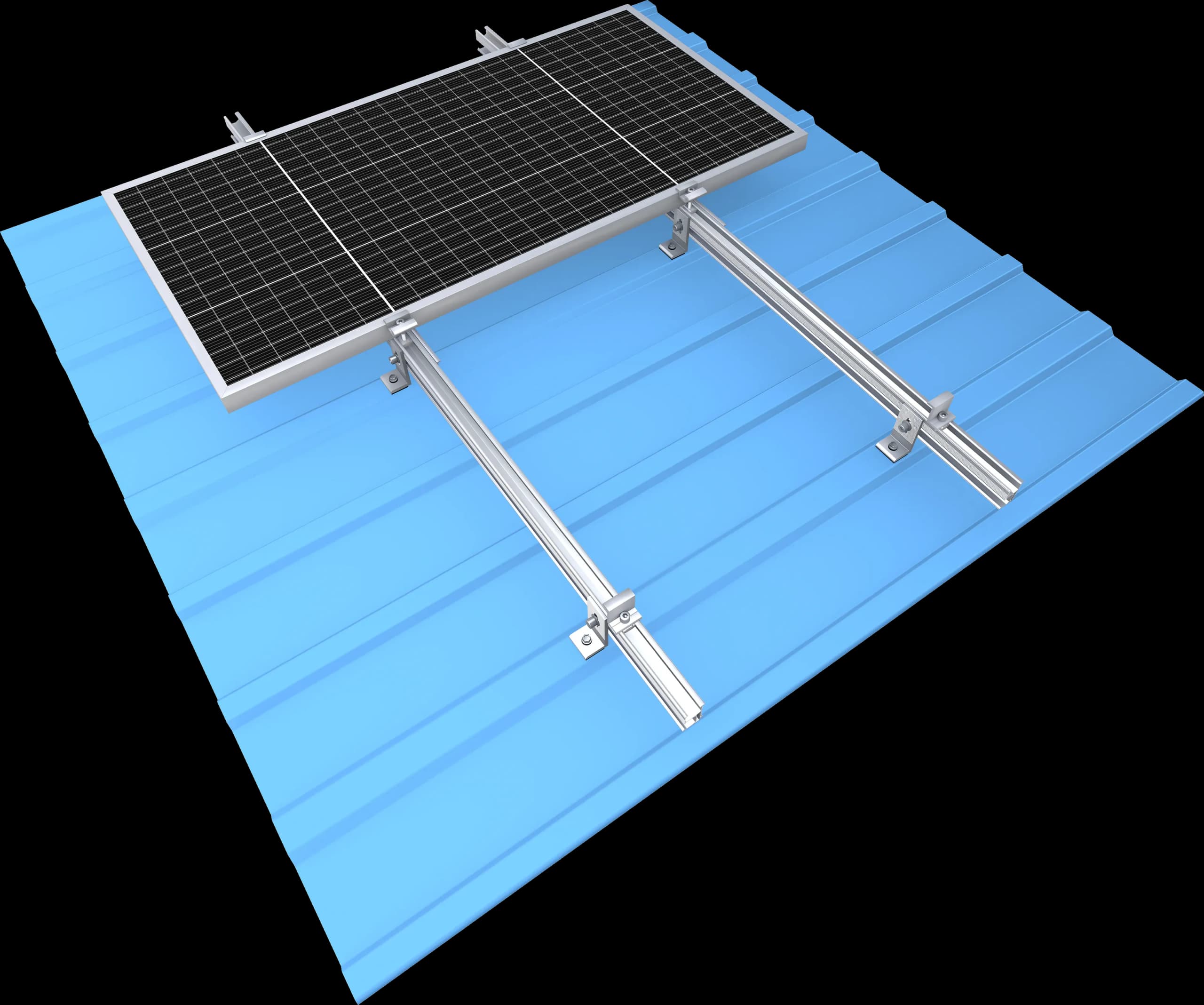
Solaris WAVE
An all-aluminum metal roof solar panel mount for trapezoidal, IBR, and corrugated roofs. Standard clamp kits fit the common sheet profiles, factory-made custom kits cover the rest, and the lightweight, simplified design keeps both material and labor costs where a commercial rooftop budget needs them.
Learn More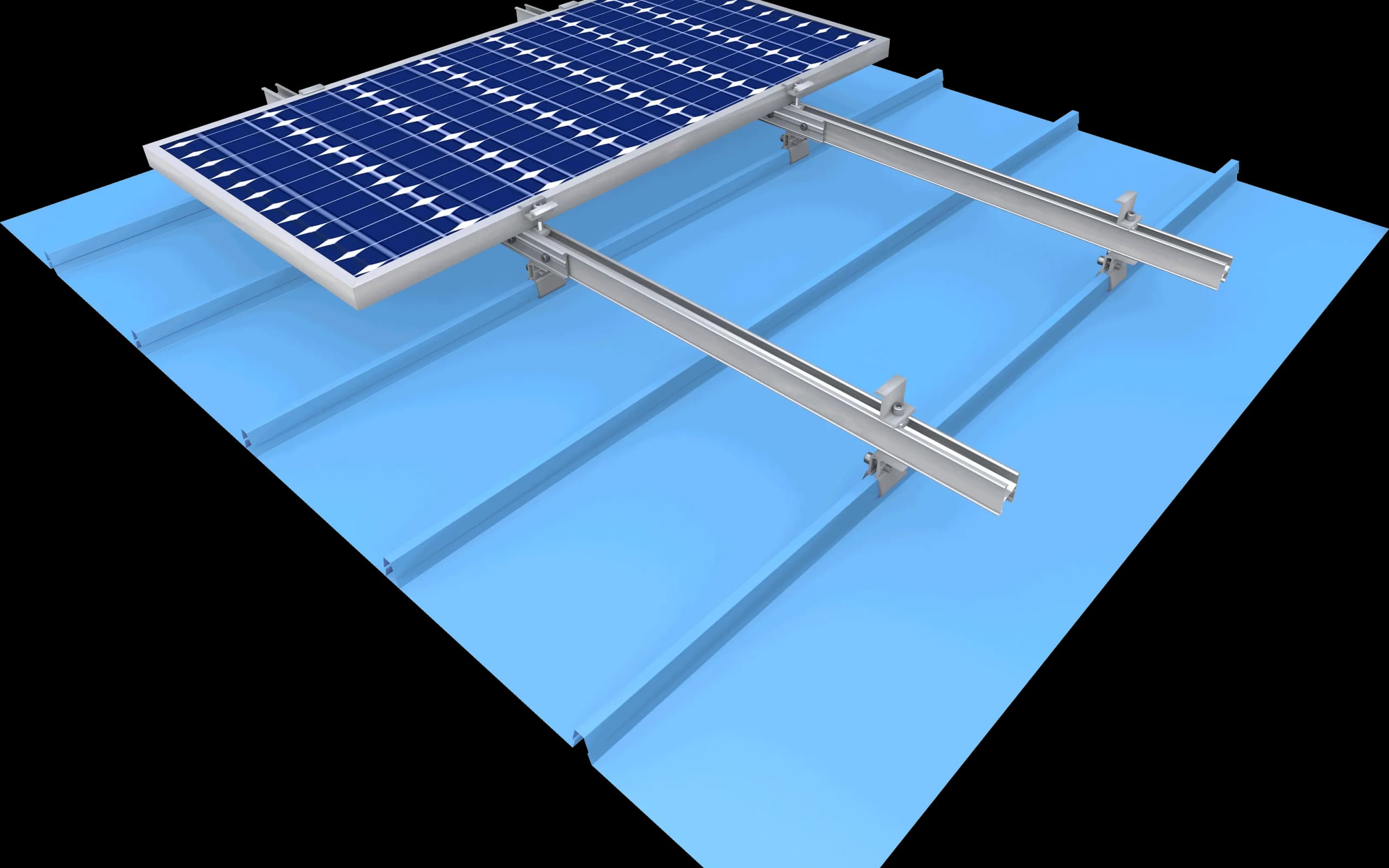
Apollo SEAM
An all-aluminum, non-penetrating mounting system for standing seam metal roofs. Clamps grip the raised seam — no holes in the roof — with standard kits for the common seam types and custom clamps made for the rest.
Learn More