
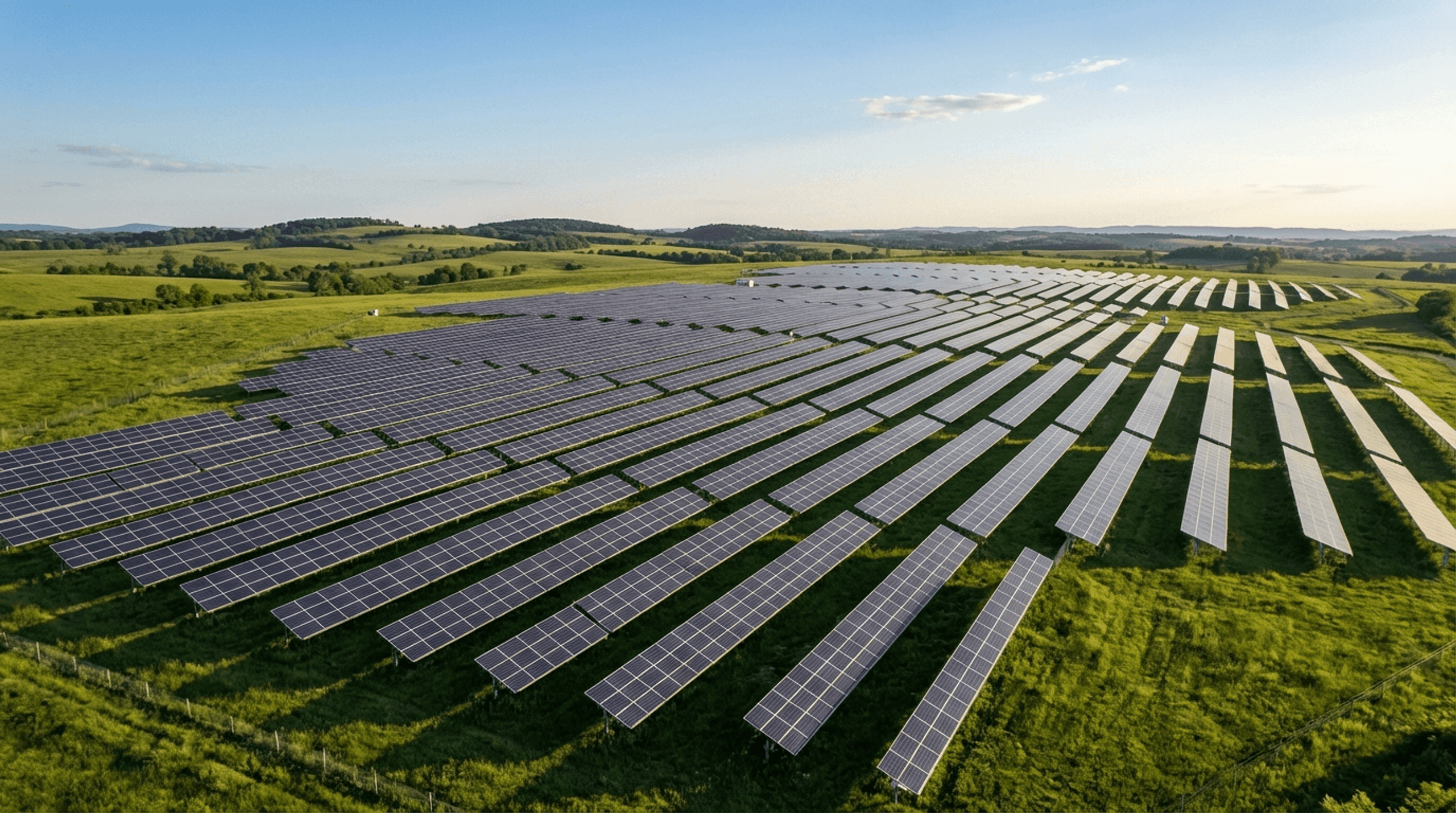
Solar Ground Mounting Systems
Aluminum and steel ground mount solutions for commercial and utility solar deployments.
View Products
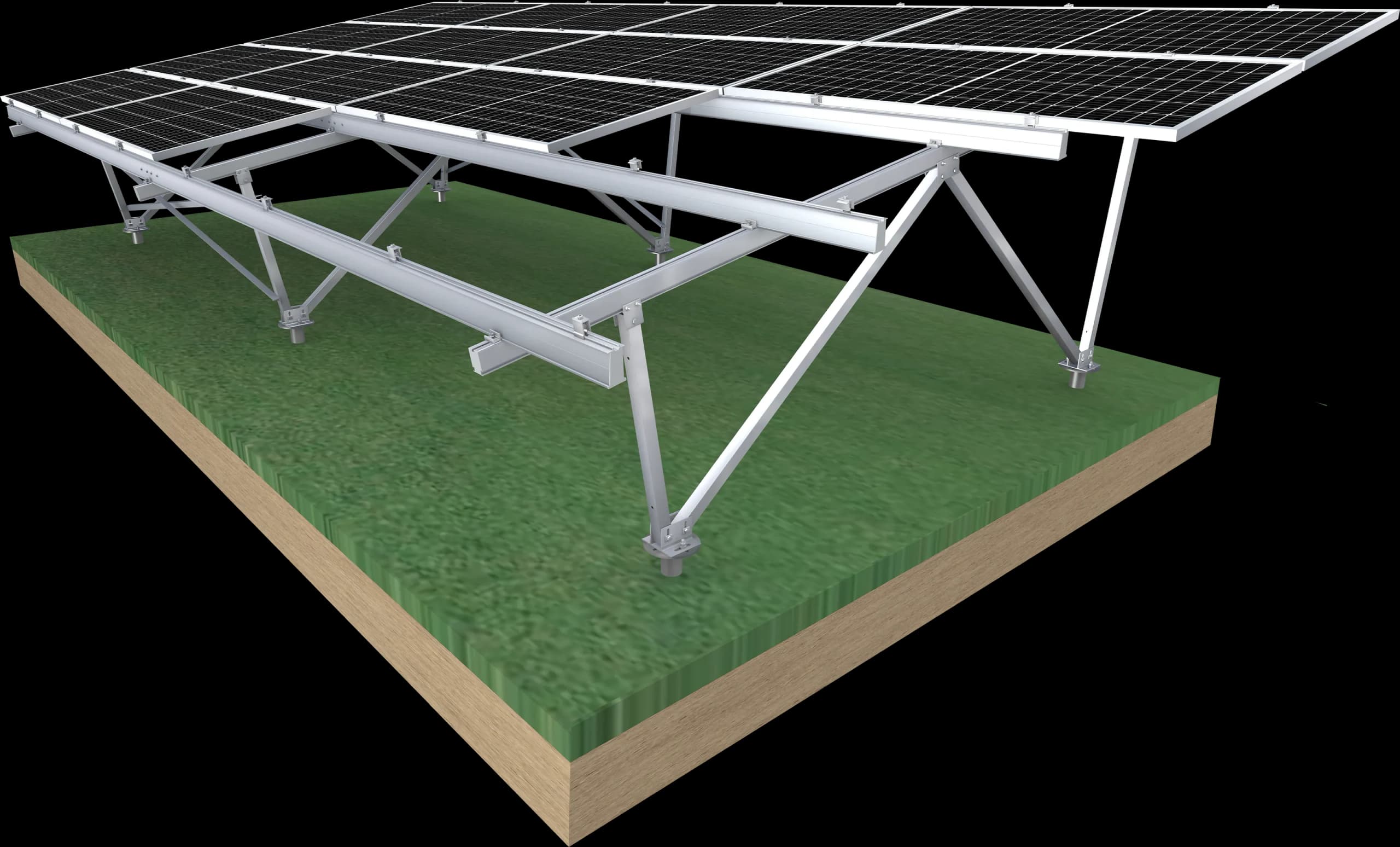
Terra AL
An all-aluminum ground mount for commercial and utility-scale solar farms. The structure arrives factory pre-assembled and unfolds on site, and its sliding rails and adjustable bases absorb foundation tolerances — so large arrays go up fast, straight, and rust-free.
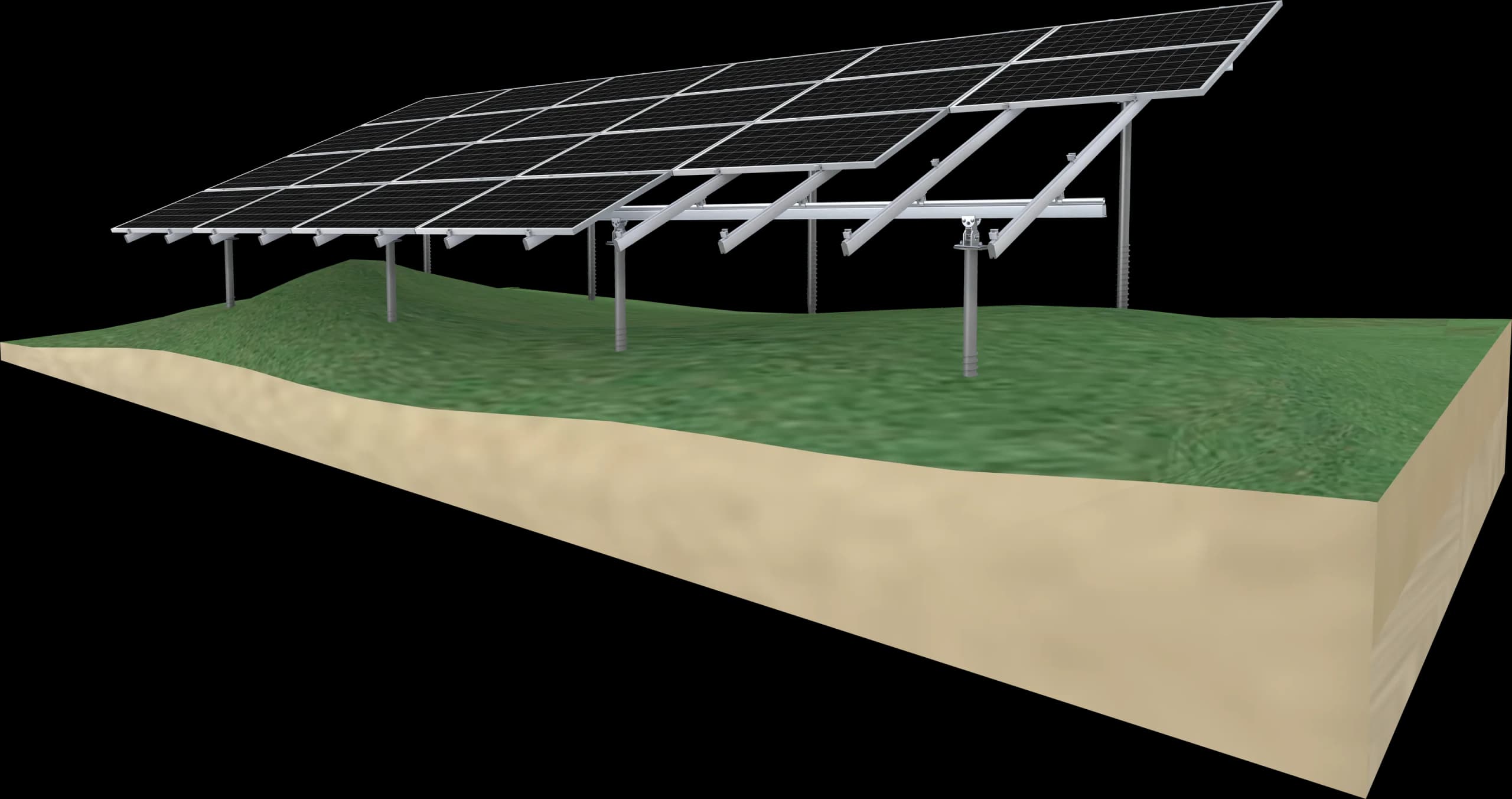
Terra FLEX
A terrain-adaptive ground mount for hillside, sloped, and uneven land. Dual-axis adjustment lets the structure follow the ground — slopes up to 30° — with no grading, no concrete, and click-in assembly that cuts install time by up to 30%.
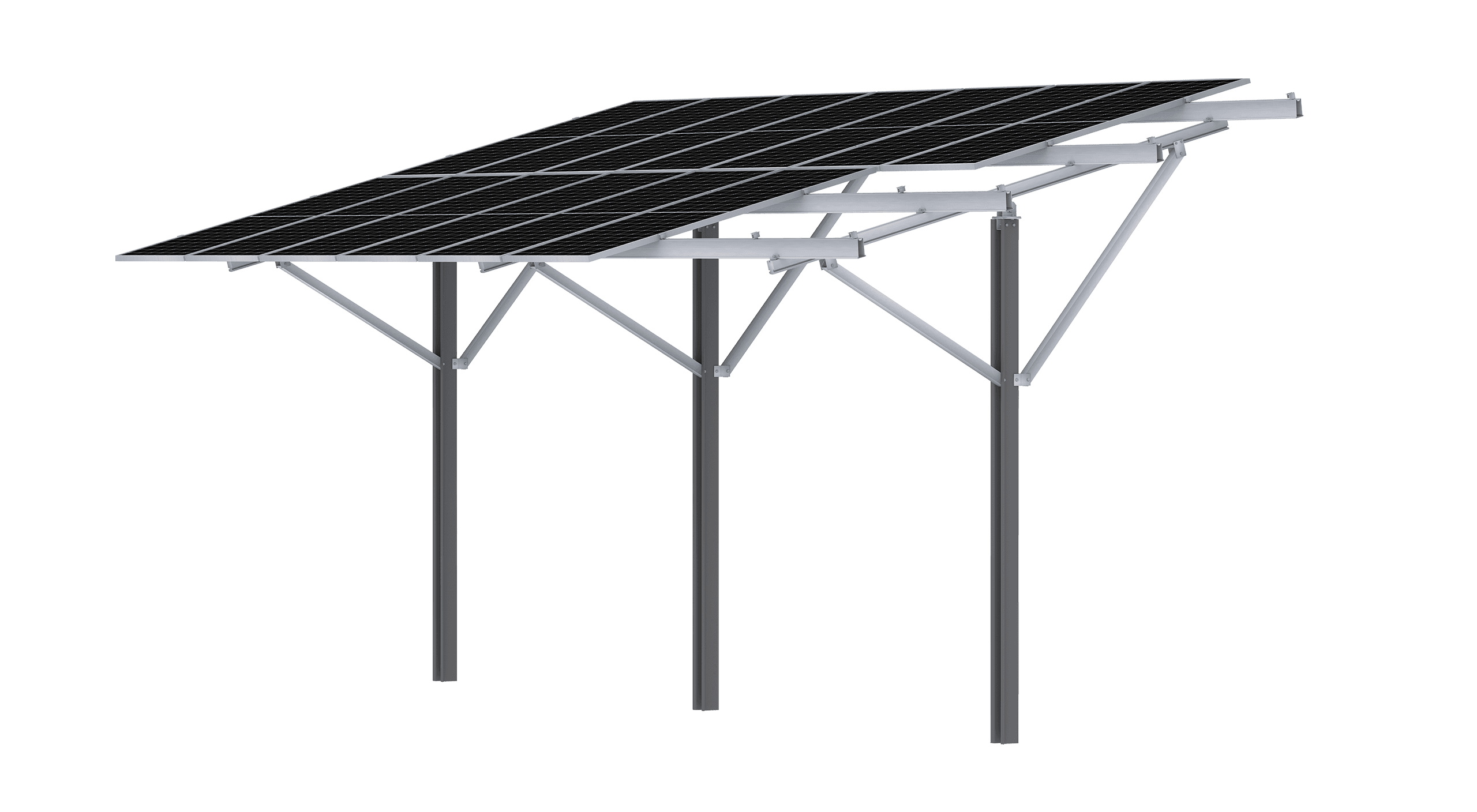
Terra SP
A single-post ground mount for utility-scale solar. One pile-driven post carries each panel table — no concrete, a fraction of the foundation points, and snap-on clamps that cut panel installation time by up to 30%.
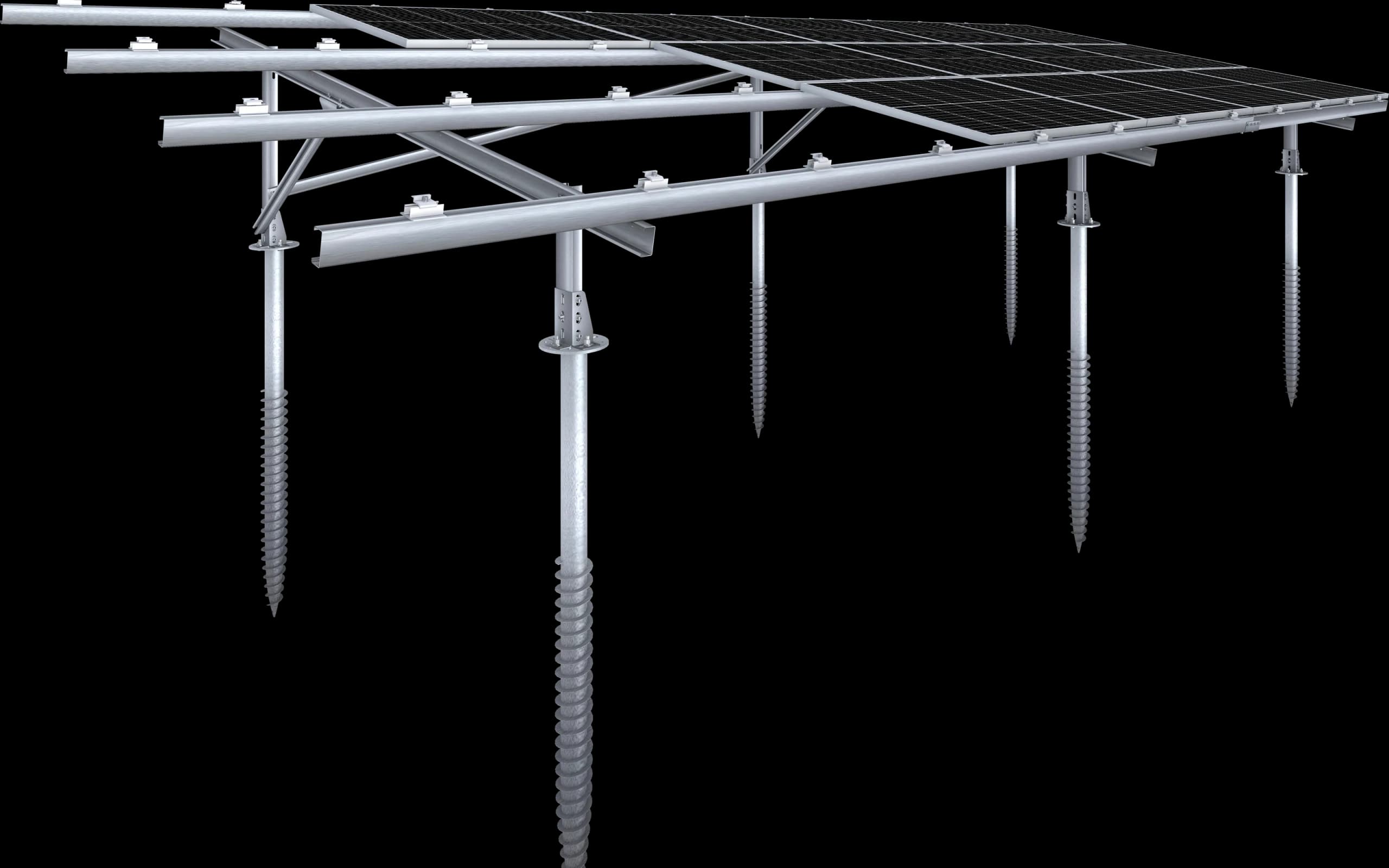
Terra ZAM
A coated-steel ground mount for commercial and utility-scale solar farms. ZAM (Zn-Al-Mg) steel matches galvanized corrosion protection at a lower cost, and nut-free clamps snap panels on up to 30% faster.
About Solar Ground Mounting Systems
Megawa Solar makes solar ground mounting systems for ground mounted solar panels of every size — from small commercial arrays to multi-megawatt utility-scale power plants. Each one is a complete ground mount frame for a ground-based PV array, matched to the foundation the soil calls for. We offer two primary material options: AL6005-T5 aluminum (Terra AL) for lightweight, corrosion-resistant deployments, and Zn-Al-Mg coated steel (Terra ZAM) for maximum structural strength and cost efficiency at scale.
Aluminum Ground Mount
Lightweight, corrosion-resistant — ideal for coastal or humid environments
Steel Ground Mount
High-strength ZAM steel — cost-effective for large utility-scale projects
Sloping Terrain
Hilly or uneven ground requiring per-post height adjustment
Single Post Design
Minimum ground footprint with pile-driven single post structure
Wind and snow loads are engineered to each project: every system ships with a structural calculation for the site, to JIS C 8955, ASCE/SEI 7 and IBC, or Eurocode EN 1991. Terra AL and Terra ZAM are designed at a fixed tilt between 0° and 45°. Foundations follow the soil test — ground screws or concrete for Terra AL, with driven piles as a further option for Terra ZAM.
For hillside and uneven land, Terra FLEX follows slopes up to 30° with no grading and no concrete, while Terra SP carries each panel table on a single pile-driven post. Terra AL arrives factory pre-assembled, and the clamp systems on Terra ZAM, Terra FLEX and Terra SP cut panel installation time by up to 30% compared with bolted clamps.
Frequently Asked Questions
Common questions about solar ground mounting systems from installers, EPCs, and distributors.
Should I choose aluminum (Terra AL) or steel (Terra ZAM) for my ground mount project?
Choose Terra AL (aluminum) for projects in coastal, humid, or corrosive environments where weight and corrosion resistance are priorities. Choose Terra ZAM (Zn-Al-Mg coated steel) for utility-scale projects where structural strength and material cost are the primary considerations. Both are engineered to the site's wind and snow loads and share the same design tilt range (0° to 45°).
What foundation types are compatible with your ground mount systems?
Terra AL uses ground screws or concrete. Terra ZAM adds driven piles to those two. Terra FLEX uses ground screws only, with no concrete and no grading. Terra SP is pile-driven as standard, with ground screw and concrete options. Ground screws install faster because there is no concrete curing time. We recommend a geotechnical assessment for utility-scale projects.
What wind and snow loads are your ground mount systems designed for?
There is no single fixed wind rating. Wind and snow loads are engineered to each project, and every system ships with a structural calculation for the site. Design codes: JIS C 8955 (Japan), ASCE/SEI 7 and IBC (US), Eurocode EN 1991 (Europe). Listed snow load limits are 1.5 kN/m² for Terra ZAM and 1.4 kN/m² for Terra FLEX and Terra SP.
Can your ground mount systems handle sloping or uneven terrain?
Yes. Terra FLEX is designed for hillside, sloped and uneven land: dual-axis adjustment follows slopes up to 30° with no grading. Terra SP also installs on slopes. For other terrain, our engineering team designs the structure per project.
How are solar panels installed on the ground?
Foundations go in first: ground screws, driven piles, or concrete, chosen from the soil test. The ground mount frame — also called ground mount racking — bolts onto them at the design tilt, and the panels clamp onto the frame. Ground screws need no concrete and no curing time, so the frame can go up right after driving. Terra AL arrives factory pre-assembled, which shortens the work on site.
Not Sure Which Product Fits Your Project?
Our engineering team can help you select the optimal mounting system for your specific project requirements, site conditions, and budget.